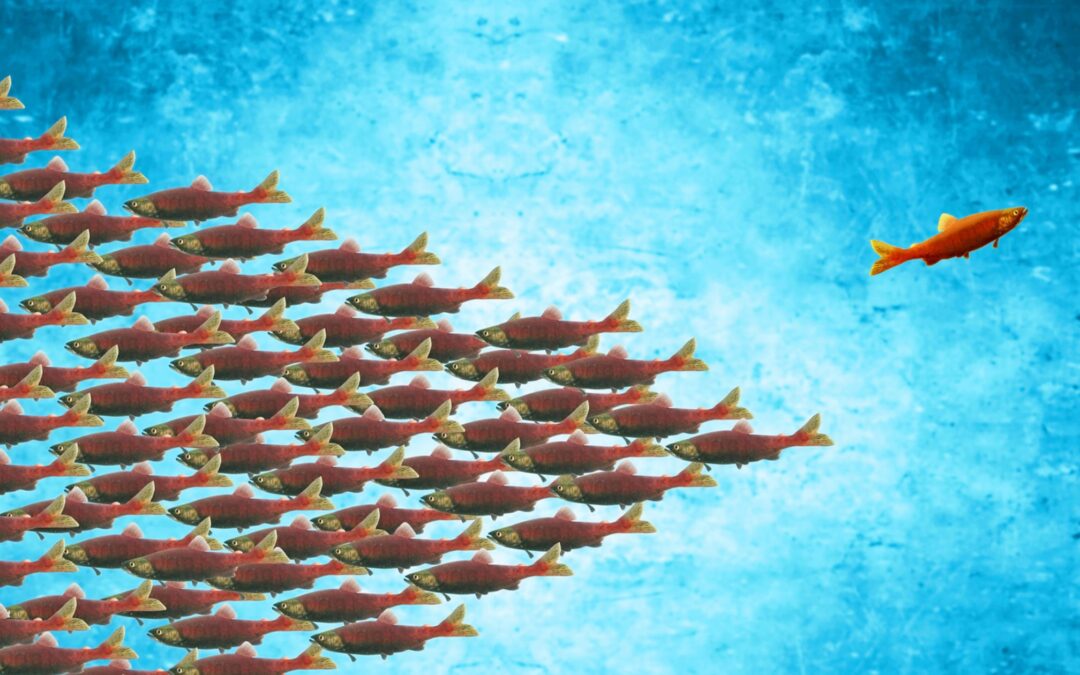
What do you stand for?
What lines won’t you cross, regardless of the cost?
I’ve been thinking about these questions since listening to a great episode of The Curiosity Shop with Brené Brown and Adam Grant called “Building Integrity in the Age of Normalized Cheating.”
In it, they discuss the difference between moral identity and moral image.
Moral identity is the degree to which being a moral person is central to your sense of self. It’s seeing yourself as someone who does the right thing.
Moral image is wanting to be seen as a good person by others.
The two sound similar, but they aren’t the same.
Strong moral identity is built on knowing the answers to the questions above. If fairness and integrity are central to who you are, your choices will flow from them regardless of the situation.
Moral image depends on the context you find yourself in. Adam explains that if you’re driven by moral image and you believe everyone around you is cheating, you’ll feel more justified in cheating too. After all, no one around you would judge you for it.
Moral identity says, “Cheating is always wrong.” Moral image says, “Well, it depends on the situation.”
Being committed to being a good person leads to very different behavior than simply wanting to be seen as one.
This is true for organizations as well. And we’ve watched it play out on a massive scale over the past few years.
The clearest example is how Target and Costco responded to the anti-DEI push.
Target’s story is well known. For years, Target invested heavily in DEI inside the company, in its stores and in the community. That included how it responded after the murder of George Floyd in Minneapolis, where Target is headquartered.
Many assumed Target was acting from moral identity. The first cracks appeared in 2023, when Target pulled Pride merchandise after a backlash. In 2024, it stopped carrying Pride products in all of its stores.
Then, in January 2025, days after the new administration signed an executive order targeting DEI, Target announced it was ending its DEI goals.
“The Minneapolis-based retailer said the changes to its “Belonging at the Bullseye” strategy would include ending a program it established to help Black employees build meaningful careers, improve the experience of Black shoppers and to promote Black-owned businesses following the police killing of George Floyd in 2020.” (source)
Now consider Costco, a company in the same industry facing the same pressure in the same week.
The day before Target’s announcement, Costco shareholders voted on a proposal from a conservative think tank. The proposal pushed the company to report on the risks of its DEI programs. Costco’s board unanimously recommended against it, and more than 98% of shares voted no.
In its response to the proposal, the board wrote:
“Our efforts at diversity, equity and inclusion remind and reinforce with everyone at our Company the importance of creating opportunities for all. We believe that these efforts enhance our capacity to attract and retain employees who will help our business succeed.” (source)
Costco has a documented moral identity that has guided how it does business for decades. At its heart is a simple principle: “Do the right thing.” A code of ethics backs it up.
- Obey the law
- Take care of our members
- Take care of our employees
- Respect our suppliers
- Reward our shareholders
When the pressure to roll back DEI came for Costco, its leadership didn’t waver. They were clear on what they stood for.
At Target, the same pressure cracked the leadership team. Instead of asking, “What do we stand for?” they asked, “What do people want us to stand for?”
The fallout followed. Target faced a national boycott, months of falling store traffic and declining sales. Its CEO stepped down at the start of this year. Meanwhile, Costco’s traffic kept growing.
That is the difference between moral identity and moral image.
So I’ll ask again. What do you stand for? What does your organization stand for?
Answering those questions clearly is a start. The harder work is knowing what living them looks like when the pressure comes. It’s some of the most important work you can do.